The commercial shirt
Three letters on the chest
JVC’s arrival in 1981 gave the Arsenal shirt a new kind of inscription. The partnership would outlast any single kit design.
1981–99 · The JVC Years · 3 minute read
A new name on the object
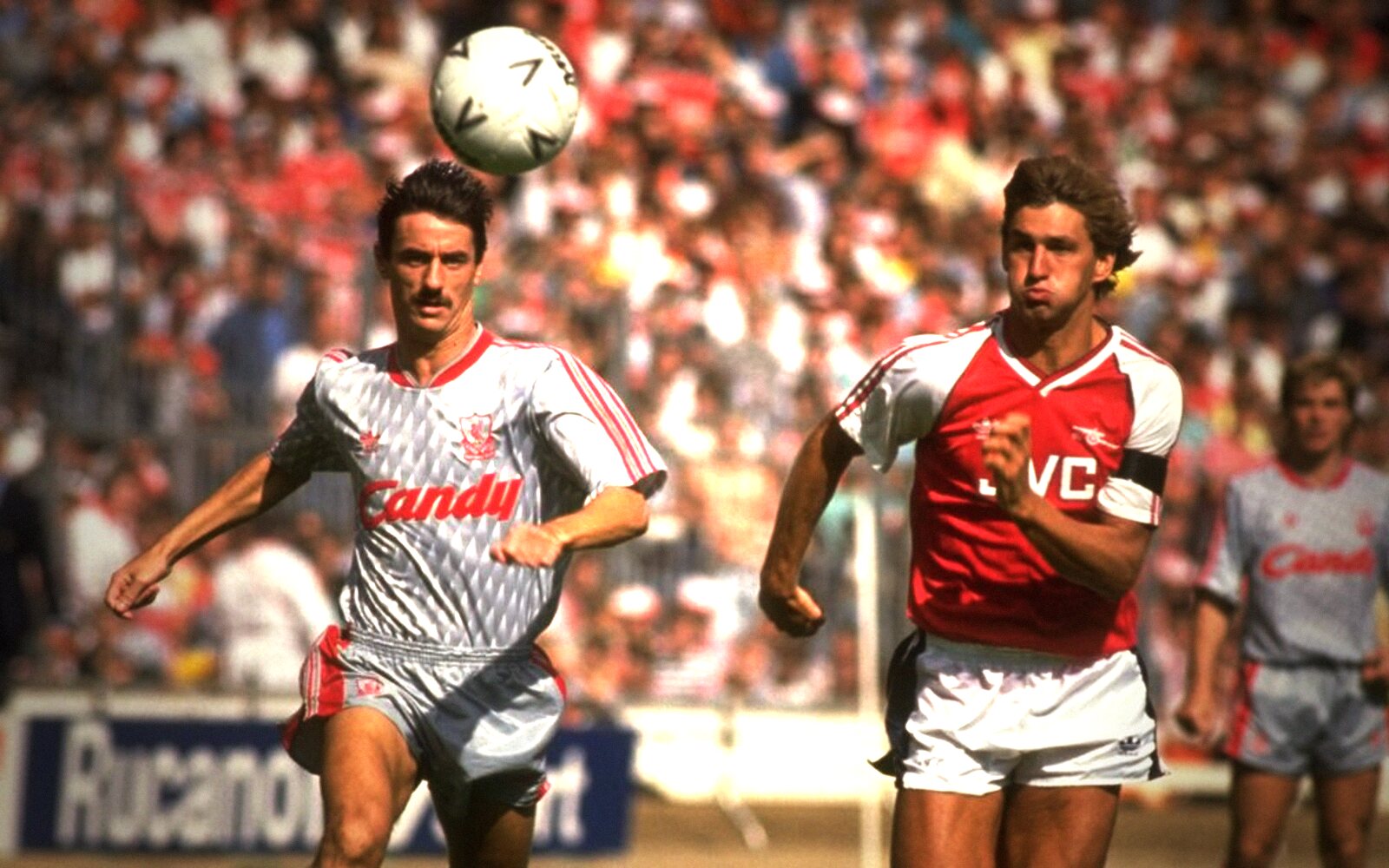
JVC became Arsenal's first shirt sponsor in 1981. The sponsorship chronology published by AFC Betting identifies the electronics company as the first brand to appear on the club's shirt, while What Hi-Fi dates the partnership from 1981 to 1999. Those dates define something different from a manufacturer's contract or a run of one particular shirt. They describe a name occupying space on a succession of garments. For an archive, that distinction matters. A sponsor can be a practical way of recognising a period, but it should not cause different seasons, designs and achievements to collapse into one undifferentiated object. The first sponsored shirt is a beginning, not the whole partnership.
Reading the chest differently
On a sponsored football shirt, the chest carries more than the identity of the team. The company name asks to be read alongside the club's colours and badge. That is a visual interpretation rather than a claim about the terms of Arsenal's original agreement: the cited sources establish the relationship and its duration, not an itemised account of its first negotiation. It is unnecessary to invent a fee or a boardroom scene to explain the change. The important fact is visible and chronological. A name that did not belong to the club entered the shirt's design, and that name remained associated with Arsenal for eighteen years. The archive can describe the alteration without pretending to know every commercial decision behind it.
A long partnership, not one shirt
What Hi-Fi singles out the 1989 championship at Anfield as a highlight of the JVC relationship, recording Arsenal's 2–0 victory over Liverpool. That later moment helps explain why a sponsor's name can acquire historical associations beyond the commercial purpose for which it appeared. It also warns against dating a shirt by memory alone. The sponsor was present across a long span; identifying JVC does not by itself identify the season. The 1981 beginning and the 1989 title belong within the same partnership but remain separate historical points. A collection should preserve that separation, allowing the first shirt to speak about the introduction of sponsorship rather than borrowing the entire meaning of a later triumph.
The end makes the span visible
The BBC's report announcing Sega's replacement of JVC in April 1999 described the outgoing relationship as eighteen years long. Written at the moment of transition, it supplies a useful contemporary boundary to the retrospective chronology. Seen from that ending, the 1981 shirt marks the opening of a substantial chapter rather than a brief experiment. Its three-letter inscription can be read as both commercial text and a dating clue, provided the clue is used with care. The garment records the point at which Arsenal's playing identity made room for a sponsor. The subsequent length of the association gives that beginning its perspective, but not a licence to attribute every later JVC-era memory to this first version of the shirt.