Manufacture and continuity
The swoosh arrives
Nike's arrival in 1994 changed the maker's mark without changing the sponsor. It began a twenty-year sequence that would later become an exhibit in its own right.
1994–96 · The JVC Years · 3 minute read
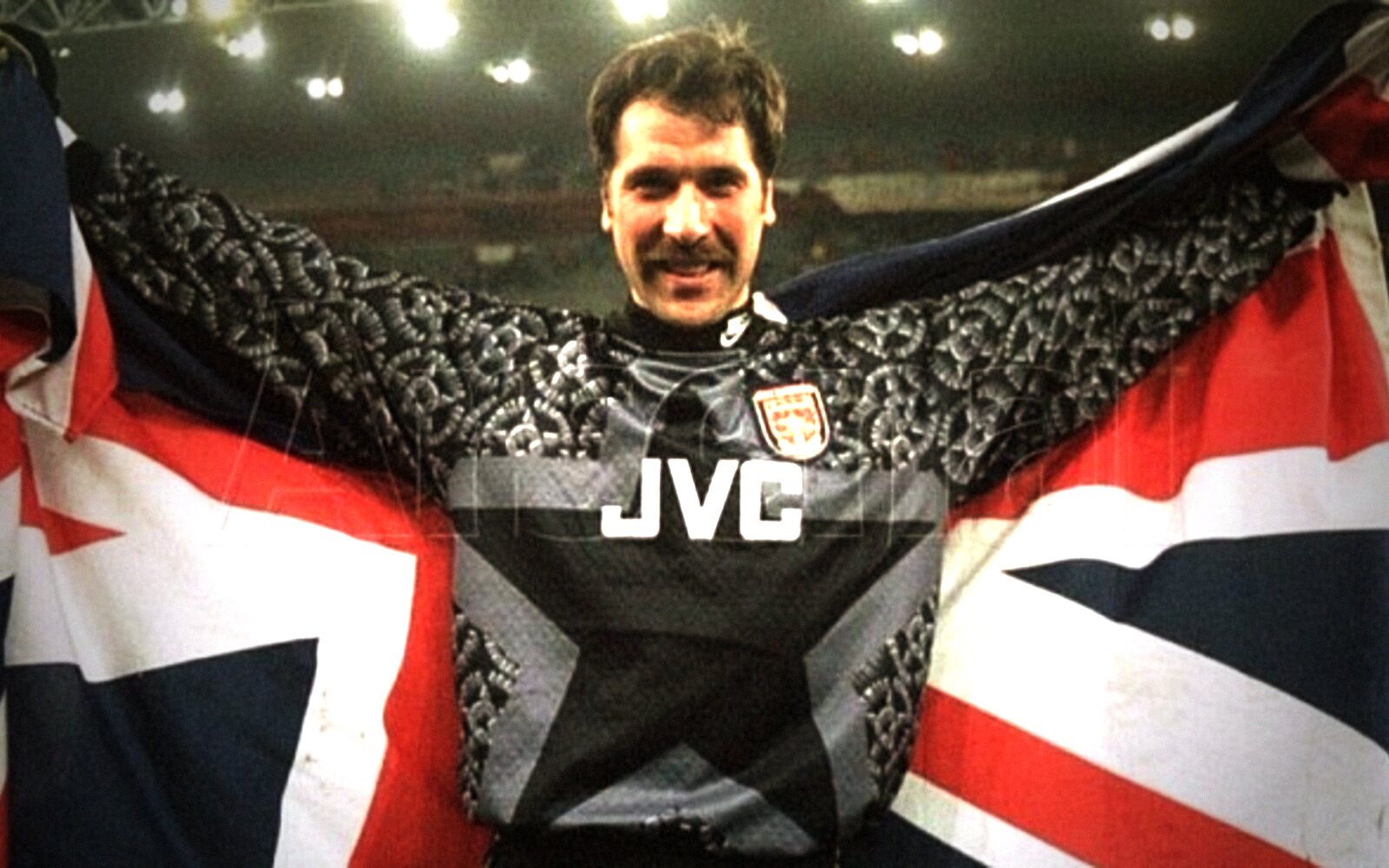
A different signature
Nike became Arsenal's kit manufacturer in 1994, succeeding Adidas. The change introduced the swoosh to a home shirt whose fundamental identity remained red and white. JVC continued as chest sponsor, so the new manufacturer did not arrive with an entirely new set of commercial inscriptions. This separation is useful when reading the garment. One relationship had ended and another had begun, while the sponsor's name continued across the boundary. The shirt records overlapping timelines rather than a single comprehensive reinvention.
What had actually ended
The preceding supplier was Adidas, not Umbro. Umbro belonged to an earlier chapter, before Adidas began supplying Arsenal in 1986. Keeping that sequence intact prevents a familiar simplification in which several older makers become an indistinct pre-Nike era. The first Nike shirt followed eight years of Adidas clothing, including two league championships and the domestic cup Double of 1993. Those achievements belong to the earlier garments; the manufacturer's change supplies a boundary without transferring their history to its successor.
A beginning without hindsight
Seen from 1994, the first Nike home shirt could not yet stand for the entire partnership that followed. Its significance as the opening of a twenty-year association is retrospective. This is an important distinction in a collection organised around celebrated eras. Later achievements can make an early object appear to announce a settled future, although the object itself only records a new supplier at a particular moment. The shirt should first be understood as clothing from its own seasons, before it becomes the first item in a longer sequence.
Twenty years assembled
In May 2014, Arsenal announced a commemorative Nike shirt celebrating the partnership after that year's FA Cup victory. Using the 2013–14 home shirt as its base, the object incorporated a design inspired by twenty Arsenal kits from the preceding two decades. This was not another ordinary season's home shirt. It gathered earlier designs into a retrospective composition, turning the manufacturer's accumulated work into the subject of a new garment. The sequence that began in 1994 had become material for deliberate interpretation.
From supplier to museum object
Arsenal's announcement described plans for the commemorative shirt to enter the club museum after public display in London. That destination gives the Nike period an unusually explicit archival ending: a manufacturer helped make an object about its own history with the club. Placed beside the first home shirt, the composite marks the distance between beginning and retrospective. One introduced a new maker's signature; the other assembled a selection of what that signature had accompanied. Neither needs to stand for every garment between them.